01
Share his story.
One reason regimes can imprison people quietly is because nobody outside knows their name. Alexei Gorinov's name should be known. Share this page on social media, send it to one journalist, mention him once a week.
Political prisoner · Russian Federation
A 64-year-old Moscow lawyer and elected councillor, jailed for ten years for saying — at a public meeting — that Ukrainian children were dying in the war.
Detained since 26 April 2022
1,643days
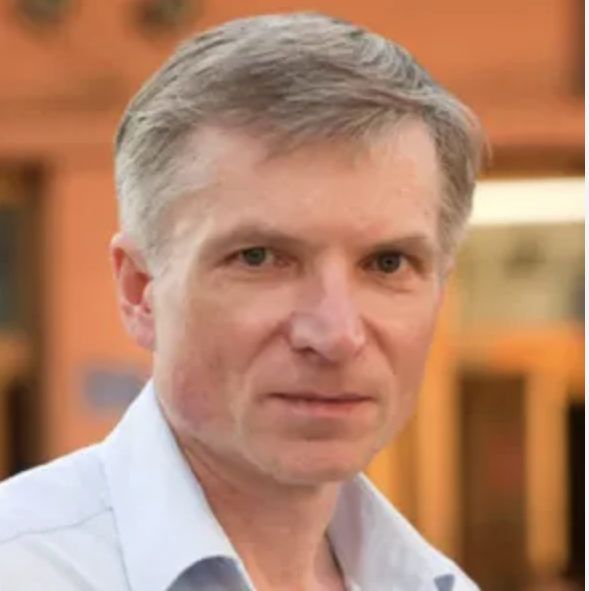
He was the first person in Russia sentenced under wartime censorship laws. He has not been the last.
Alexei Gorinov spoke out when silence was safer.
He was the first elected official in Russia to publicly call for an end to the illegal war in Ukraine.
For speaking with courage and compassion, he was imprisoned.
Today, gravely ill and denied his freedom, Alexei Gorinov is dying in a Russian prison.
YOU can help him.
§ 01 · International recognition
United Nations
Working Group on Arbitrary Detention; Special Rapporteur
European Union
Statement by High Representative
Amnesty International
Solidarity campaign · prisoner of conscience
Memorial
Recognised political prisoner
U.S. State / Treasury
Magnitsky sanctions on Judge Mendeleeva
McCain Institute
Free Political Prisoners Initiative
European Parliament
34 MEPs open letter
Magnitsky Awards
2022 recipient
§ 02 · What you can do
01
One reason regimes can imprison people quietly is because nobody outside knows their name. Alexei Gorinov's name should be known. Share this page on social media, send it to one journalist, mention him once a week.
02
Letters from strangers reach him. They tell the prison administration that he has not been forgotten — which materially affects how he is treated. Letters must be in Russian to pass the censors. We've prepared a guide.
03
Amnesty International runs an active solidarity campaign. If you are in the EU, US, UK, or Canada, contact your foreign ministry, state department, MP or Congressional office and ask what they are doing for Alexei Gorinov by name.
04
Memorial, OVD-Info, and First Department do front-line legal and documentation work for Russian political prisoners. Donate to one of them rather than to us — we are not a fundraising operation.
§ 03 · The words
On 15 March 2022 — three weeks into Russia’s full-scale invasion of Ukraine — the Krasnoselsky District council met to plan a children’s drawing competition. Alexei Gorinov asked to speak first.
“I believe that all the efforts of civil society should be aimed only at stopping the war and making sure that Russian troops withdraw from the territory of Ukraine. Children are dying every day.”
For these words — for calling a war a war instead of a “special military operation,” and for saying Ukrainian children were dying — he was charged under a brand-new law passed eleven days earlier. He was the first person in Russia ever convicted under it.
§ 04 · The case against him
Article 207.3
Russian Criminal Code
“Public dissemination of knowingly false information about the use of the Armed Forces of the Russian Federation.”
In plain language — It is now a crime in Russia to contradict the official military narrative. Calling the invasion a “war” is enough.
Article 205.2
Russian Criminal Code
“Public justification of terrorism.”
In plain language — In November 2024, while already in prison, Gorinov was charged a second time. The accusation: he allegedly discussed the Ukrainian strike on the Kerch Bridge and the Azov Regiment with cellmates. The 'evidence' came from two fellow inmates wearing recording devices, who were rewarded by prison authorities afterwards.
These laws are commonly referred to as Russia’s “war censorship laws.” The UN Working Group on Arbitrary Detention has formally found Gorinov’s detention under them to be arbitrary and unlawful.
§ 05 · Timeline
15 March 2022
At a meeting to plan a children's drawing competition, calls the invasion a war and references the deaths of Ukrainian children.
15 March 2022
At a meeting to plan a children's drawing competition, calls the invasion a war and references the deaths of Ukrainian children.
26 April 2022
Detained at his Moscow office.
26 April 2022
Detained at his Moscow office.
8 July 2022
Judge Olesya Mendeleeva sentences him under Article 207.3. First conviction in Russia under wartime censorship law.
8 July 2022
Judge Olesya Mendeleeva sentences him under Article 207.3. First conviction in Russia under wartime censorship law.
November 2022
Receives the Magnitsky Human Rights Award. Memorial recognises him as a political prisoner. UN Working Group on Arbitrary Detention rules his detention unlawful.
November 2022
Receives the Magnitsky Human Rights Award. Memorial recognises him as a political prisoner. UN Working Group on Arbitrary Detention rules his detention unlawful.
December 2022
The same colony where Alexei Navalny was held.
December 2022
The same colony where Alexei Navalny was held.
Winter 2022 – early 2023
Forced to clear snow despite respiratory illness. Transferred to a prison hospital after public outcry; over 240 medical professionals sign an open letter to Putin.
Winter 2022 – early 2023
Forced to clear snow despite respiratory illness. Transferred to a prison hospital after public outcry; over 240 medical professionals sign an open letter to Putin.
Early 2023
34 MEPs sign an open letter calling for his release. Solidarity rallies in over 20 countries.
Early 2023
34 MEPs sign an open letter calling for his release. Solidarity rallies in over 20 countries.
September 2023
Charged with 'justifying terrorism' over alleged conversations with cellmates wearing recording devices.
September 2023
Charged with 'justifying terrorism' over alleged conversations with cellmates wearing recording devices.
April 2024
Publicly states he 'would never voluntarily take his own life' and asks the world to remember that.
April 2024
Publicly states he 'would never voluntarily take his own life' and asks the world to remember that.
August 2024
16 prisoners freed. Released political prisoner Oleg Orlov says the first thing everyone asked at the airport was: 'Where is Alexei Gorinov?'
August 2024
16 prisoners freed. Released political prisoner Oleg Orlov says the first thing everyone asked at the airport was: 'Where is Alexei Gorinov?'
29 November 2024
For 'justifying terrorism.' Cumulative sentence now requires roughly five more years in harsher conditions.
29 November 2024
For 'justifying terrorism.' Cumulative sentence now requires roughly five more years in harsher conditions.
December 2024
Designated under the Global Magnitsky Act for her role in Gorinov's arbitrary detention.
December 2024
Designated under the Global Magnitsky Act for her role in Gorinov's arbitrary detention.
March 2025
Russia's Rosfinmonitoring places Gorinov on the official list.
March 2025
Russia's Rosfinmonitoring places Gorinov on the official list.
3 April 2025
Tells the court: 'The real terrorists are those who started this criminal war.'
3 April 2025
Tells the court: 'The real terrorists are those who started this criminal war.'
May 2025
Diagnosed after collapse during transfer. Held in cold cell, medications repeatedly confiscated.
May 2025
Diagnosed after collapse during transfer. Held in cold cell, medications repeatedly confiscated.
2025–2026
Held at PC No. 10 and Barnaul prison hospital, Altai Krai. Repeatedly placed in SHIZO punishment cells. Reports that prison guards confiscate medication and writing materials.
2025–2026
Held at PC No. 10 and Barnaul prison hospital, Altai Krai. Repeatedly placed in SHIZO punishment cells. Reports that prison guards confiscate medication and writing materials.
Sources for every date are listed on the Sources page.
§ 06 · In his own words
“I am against the war.”
“Do you still need this war?”
“My guilt is that I, as a citizen of my country, allowed this war to begin and was unable to stop it.”
“The real terrorists are those who started this criminal war, this bloody massacre that has left hundreds of thousands dead or maimed on both sides.”
“This war is, above all, a war against freedom.”
“I'm for peace, and you love war.”
§ 07 · Conditions of detention
Gorinov is 64 years old. Before prison, he had already had part of one lung surgically removed. In detention he has contracted pneumonia and tuberculosis. He has been forced to clear snow outside in winter while ill with respiratory infection. He has been placed in solitary confinement — known in Russian prisons as SHIZO, the punishment cell — repeatedly, for stretches that have been extended again and again on minor pretexts.
Guards have confiscated his medication. They have confiscated his writing materials and the documents he would need to file legal complaints. He has described the conditions as “torturous.”
The UN Special Rapporteur on the situation of human rights in Russia, Mariana Katzarova, has stated that the conditions of his detention amount to torture.
§ 08 · Press & media